

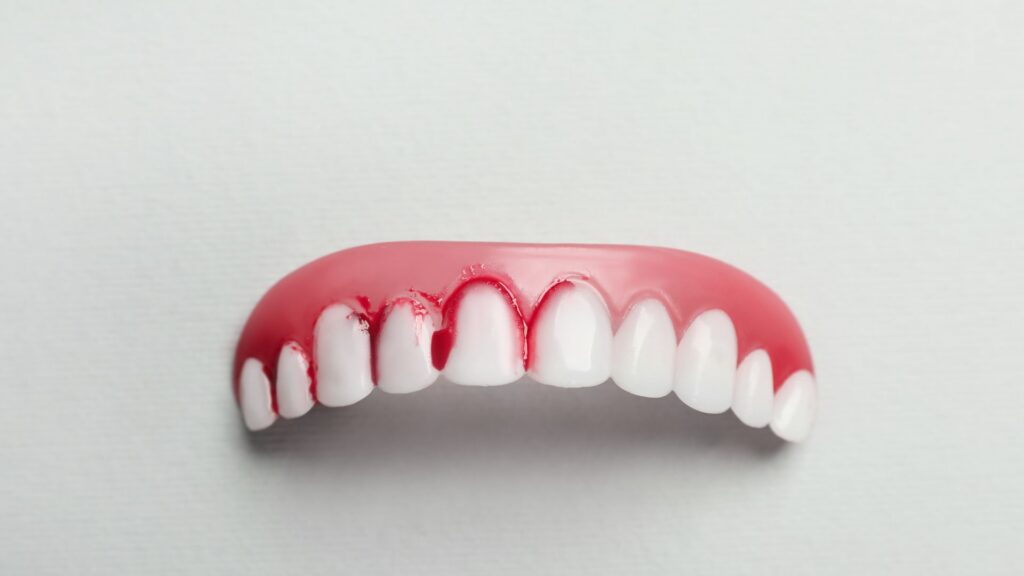
Do your gums bleed when you brush your teeth? Are they receding, or are some of your teeth starting to feel loose? This may be gum disease, known clinically as periodontitis.
Periodontitis is a chronic inflammatory disease of the tissues that hold the teeth firmly in the jaw. Left untreated, it gradually leads to the loss of bone and of the tooth’s supporting attachment, which can ultimately result in losing teeth that are otherwise healthy.
The good news is that if it is caught early, the progression of the disease can be halted effectively. The sooner treatment begins, the better your chances of keeping your own teeth.
What Is Periodontitis and How Does It Develop?
Periodontitis usually begins not with pain, but with ordinary dental plaque.
A soft bacterial film forms on the surface of the teeth every day. If it is not removed regularly, it gradually hardens into tartar, on which bacteria continue to multiply. These then trigger inflammation of the gums.
In the early stage this is gingivitis, an inflammation that is still reversible. If it goes untreated, however, the inflammation spreads deeper and begins to damage the bone and the connective fibres holding the tooth in place. At this stage we are dealing with periodontitis.
This is not solely a problem of the mouth. Long-term gum inflammation has also been linked to a higher risk of cardiovascular disease, poorer diabetes control and complications in pregnancy.
Who Is at Higher Risk of Gum Disease?
Gum disease does not develop by chance. Several risk factors play a significant part.
The greatest influence comes from:
- smoking,
- inadequate oral hygiene,
- irregular dental hygiene appointments,
- diabetes, particularly where it is poorly controlled,
- genetic predisposition,
- long-term stress,
- hormonal changes, for example during pregnancy or the menopause.
If your parents developed advanced gum disease, it is advisable to attend preventive check-ups more frequently.
How Do You Recognise Periodontitis?
In the early stages, the disease is almost entirely painless. This is precisely why many people only see a dentist once it has become advanced.
The most common symptoms include:
- bleeding gums when brushing,
- red or swollen gums,
- bad breath,
- receding gums,
- sensitive teeth,
- the formation of deeper pockets between the tooth and the gum,
- loose teeth or a change in their position.
The earlier periodontitis is detected, the simpler and more successful treatment tends to be.
How Is It Treated?
Treatment depends on how far the disease has progressed.
Early Stages
If the disease is caught in time, professional dental hygiene forms the basis of treatment. Tartar, bacterial biofilm and deposits below the gum line are removed, and the patient is given detailed instructions for home care.
Treatment also includes regular cleaning between the teeth and follow-up appointments.
More Advanced Periodontitis
If the inflammation has reached deeper tissues, the root surfaces below the gum need to be cleaned thoroughly. In some cases surgery may also be required, allowing the inflammation to be removed or the damaged tissues to regenerate.
Where some teeth have already been lost, replacement with implants or prosthetic work can be planned once the disease has been stabilised.
At m2stoma Brno, the foundation of periodontitis treatment is subgingival scaling, in other words cleaning the root surfaces below the gum margin. We carry this out under local anaesthesia and, in indicated cases, under antibiotic cover. We use the Guided Biofilm Therapy (GBT) system with Airflow technology primarily for gum inflammation, that is, gingivitis. The frequency of check-ups is set individually according to each patient’s level of risk.
What Can You Do Yourself?
The success of treatment depends not only on the work of your dentist, but also on your daily care at home.
We recommend:
- brushing your teeth at least twice a day using the correct technique,
- using interdental brushes every day,
- using mouthwash only as recommended by your dentist or dental hygienist,
- giving up smoking or cutting down significantly,
- keeping blood sugar levels well controlled if you have diabetes,
- attending preventive check-ups and dental hygiene appointments regularly.
Frequently Asked Questions
Can gum disease be cured completely?
Unfortunately, damaged tissues cannot always be restored. If the disease is detected early, however, its progression can be halted and a stable condition maintained long term. Regular care then remains important for life.
What is the difference between gum disease and periodontitis?
In everyday speech people still talk about gum disease, but the correct clinical term is periodontitis. Today, most people use both names for the same condition.
Does periodontitis mean I will lose my teeth?
Not necessarily. If the disease is treated in time and the patient follows the recommended hygiene routine and attends regular check-ups, it is often possible to keep your own teeth for many years.
Conclusion
Periodontitis is among the most common causes of tooth loss in adults, yet it can be managed very well when detected early. Do not underestimate bleeding gums or any other early symptom.
At m2stoma Brno, we will carry out a thorough examination, assess the condition of your gums and the surrounding bone, and propose a treatment plan to help halt the disease and keep your smile for as long as possible.