

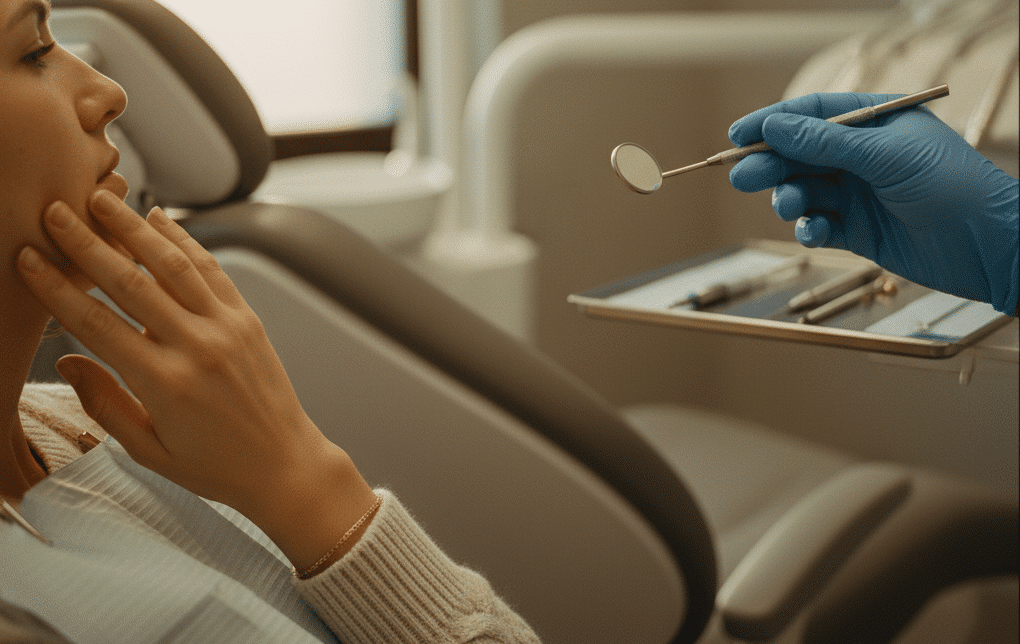
Pain After Root Canal Treatment — What Is Normal and When Should You Worry?
You have just returned from the dentist and your tooth hurts more than you expected. Perhaps you are thinking: “Wasn’t the pain supposed to stop?” If you have just undergone root canal treatment, this reaction is perfectly understandable — and you are certainly not alone. According to a systematic review published in Applied Sciences (2021), up to 40 % of patients experience pain within the first 24 hours after root canal treatment.
We understand that pain after endodontic treatment causes concern. Many patients ask themselves: “Did it go wrong?” or “Is this a complication?” From our experience at m2stoma, we know that these are the very questions patients call us about most often in the first days after treatment.
In this article, we will clearly explain why a tooth hurts after root canal treatment, how long the pain lasts day by day, when you need to call your dentist — and what you can do for relief right now.
Why Does the Tooth Hurt After Root Canal Treatment?
During root canal treatment, the dentist removes the inflamed or necrotic nerve (dental pulp) from inside the tooth. Even though the nerve is gone, the surrounding tissues (particularly the periodontal ligament and bone around the root) respond to the procedure with inflammation. This is a natural part of healing, not a sign of a problem.
Pain after root canal treatment has several causes:
- Irritation around the root tip — endodontic instruments and disinfecting solutions irritate the tissues beyond the root apex
- Inflammatory response — the body initiates healing, which temporarily increases sensitivity and pain
- Prolonged mouth opening — after a longer procedure, the jaw and chewing muscles may also ache
- Bite alteration — the temporary filling may sit slightly high, causing pain when biting
According to a review study in Journal of Clinical Medicine (Zona et al., 2022), mild to moderate post-operative pain after endodontic treatment is one of the most common complications — but also one of the most manageable.
How Long Does the Pain Last?
Every patient is different, but based on clinical data and our fifteen years of experience at m2stoma Brno, we can offer a general overview:
- Days 1–2 (peak pain): The anaesthesia wears off, the tooth is sensitive to pressure and touch. The pain is dull, sometimes throbbing. This is normal — it is the most pronounced phase.
- Days 3–5 (gradual improvement): The pain should diminish day by day. Sensitivity when biting may persist, but the overall trend is clear — it is getting better.
- Days 7–14 (stabilisation): Most patients are completely free of discomfort at this stage. The tooth gradually “settles in.”
When to Call Your Dentist — Warning Signs
Most pain after root canal treatment resolves on its own. However, there are situations where you should call your dentist without delay:
- Pain worsens after 3 days instead of subsiding
- Significant swelling of the face, gums or cheek
- Fever above 38 °C
- Pus or an unpleasant taste in the mouth
- The tooth feels “too high” — it contacts before the other teeth (bite interference)
- Pain does not respond to pain medication
At m2stoma, we have dedicated emergency appointments for such cases. If you have any doubts after the procedure, call us — no question is unnecessary.
What Helps Against the Pain — Practical Tips
Recommendations we give patients after every root canal treatment:
- Ibuprofen 400–600 mg every 6–8 hours — has both anti-inflammatory and analgesic effects. According to the American Dental Association (ADA), non-opioid analgesics are the first-line treatment for acute dental pain.
- Do not chew on the treated tooth for 3–5 days — the tooth needs rest
- Cold compress on the outside — apply for 15 minutes, then a 15-minute break
- Soft diet — yoghurt, soups, porridge, pasta
- Avoid: hot drinks, alcohol, smoking — anything that increases blood flow and thereby pain
- Sleep with your head slightly elevated — reduces pressure in the root area
A systematic review in Journal of Endodontics (Monteiro et al., 2021) confirmed that ibuprofen is the most effective medication for managing pain after endodontic treatment.
Frequently Asked Questions
Can a tooth still hurt a month after root canal treatment?
In rare cases, yes. Mild sensitivity may persist for 2–4 weeks, particularly in teeth with extensive infection. If the pain has not subsided after a month or returns, visit your dentist — retreatment or additional examination may be needed.
Is it normal for the tooth to hurt when biting after endodontic treatment?
Yes, sensitivity to pressure and biting is perfectly common in the first 5–7 days. The periodontal ligament around the root needs time to heal. Avoid biting on the treated tooth and the pain should gradually resolve.
Do antibiotics help with pain after root canal treatment?
No. Studies clearly show that antibiotics do not reduce post-operative pain after endodontic treatment. Ibuprofen or paracetamol are effective for pain relief. A dentist will only prescribe antibiotics when a bacterial infection has been confirmed.
Can an infection return after root canal treatment?
In rare cases (approximately 5–10 % of treatments), an infection may return — for example, due to incomplete canal cleaning or a root fracture. That is why it is important to attend the follow-up appointment and complete the treatment with a crown.
Conclusion
Mild pain after root canal treatment is normal and in most cases resolves within 3–7 days. The key is to monitor whether the pain is improving — if it is, healing is progressing correctly.
Do not hesitate to ask about anything that concerns you. At m2stoma Brno, we are accustomed to answering all our patients’ questions — before and after the procedure.
Are you experiencing pain after root canal treatment that is causing you concern? Call us or book a check-up appointment. At m2stoma, we are here for you.