

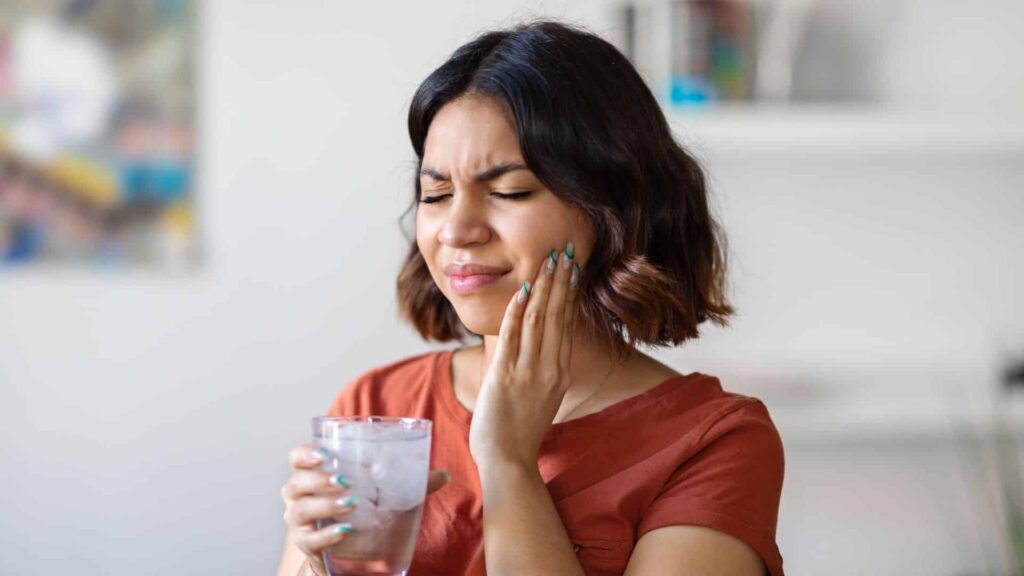
Sensitive teeth after whitening are common — six to eight patients out of ten experience them. In most cases the sensitivity disappears within 48 hours and can be managed well at home. Only rarely does it last longer and signal something other than the whitening itself.
In this article you will find an explanation of why teeth hurt after whitening, how long it typically lasts, 5 proven ways to relieve the discomfort quickly, and when it is time to call the practice.
Why Teeth Hurt After Whitening
The peroxide used during whitening passes through tiny pores in the enamel into the layer beneath — the dentin. There it briefly irritates the nerve endings, which then over-react to cold, heat, sweet, or sour. Within a few days the enamel naturally recovers, helped by saliva and the fluoride in your toothpaste, and the sensitivity subsides.
Sensitivity tends to be stronger if your enamel has been weakened by acidic drinks, if you have an exposed part of a tooth root, if there are small cracks in the enamel, or if you had sensitive teeth before whitening.
How Long the Increased Sensitivity Lasts
After in-office whitening, sensitivity is usually strongest during the first 12 hours and then gradually subsides. For most patients it is gone within 48 hours.
With at-home tray whitening using a lower concentration of peroxide, sensitivity tends to be milder and subsides within a few hours after each application.
If sensitivity lasts more than 5 days, the course is not standard. The cause is usually something else — a cavity, gum inflammation, or an exposed root surface that the peroxide has merely revealed. In that case we recommend coming in for an examination.
What Actually Helps
Toothpaste for sensitive teeth with potassium nitrate or arginine — use it twice a day for at least a week after whitening. Of everything you can do at home, this helps the most.
Fluoride gel once a week for 5 minutes supports enamel recovery and shortens the period of sensitivity.
Avoid temperature extremes for the first 48–72 hours — no iced drinks, no ice cream, no hot tea. Drink lukewarm and eat at room temperature.
No acidic food or drink for 48 hours — cola, juices, sparkling water, lemon. After whitening, the enamel is more vulnerable to acids than usual. Milk and plain water, on the other hand, support remineralisation.
A soft toothbrush and a gentle technique — hard bristles and strong horizontal strokes are not kind to the enamel after whitening. Use a soft brush and circular motions.
What Does Not Help — or Can Even Harm
Various tips circulate in online discussions. Most of them miss the mark:
Clove contains eugenol, which dulls pain briefly for about half an hour. It can serve as temporary relief, but it does not address the cause.
Herbal mouth rinses do not do much for sensitivity itself, although they can calm an irritated gum.
Aspirin placed directly on the tooth — this tip keeps appearing online and is genuinely harmful. Aspirin is acidic and damages the enamel.
A cold compress on the cheek helps with swelling after a surgical procedure, but not with tooth sensitivity — cold actually makes it worse.
When Sensitivity Is a Warning Sign
Transient sensitivity requires no intervention. However, please get in touch if:
- the sensitivity lasts more than 5 days
- the pain comes on its own, without a trigger
- a tooth hurts when you bite down
- you have a swollen gum or tooth
- a gum is bleeding and won’t stop
- the pain throbs and grows worse
These symptoms are usually unrelated to whitening itself — they suggest a cavity, an inflammation, or another problem that the peroxide has uncovered. The sooner you have it examined, the better.
How to Prevent Sensitivity at Your Next Whitening Session
Strong sensitivity after whitening does not mean you can never whiten again. You can prepare for it better.
One to two weeks before whitening, schedule a professional dental cleaning — clean enamel whitens more evenly. A week before whitening, start using a toothpaste for sensitive teeth; the day before and the day after, add fluoride gel.
At the practice, your dentist can choose a shorter cycle with a lower peroxide concentration, or several shorter sessions instead of one long one.
With an at-home tray, try a shorter application time — instead of eight hours overnight, try four hours during the day. The total peroxide dose comes out the same, but the tissue has more time to recover.
Frequently Asked Questions
Can I drink tea and coffee after whitening?
From a sensitivity standpoint, after 24–48 hours. From a whitening-aesthetics standpoint (the “white diet”), wait 48–72 hours and then drink through a straw for another 1–2 weeks to minimise contact between the drinks and your front teeth.
Will a cold compress help?
Not for tooth sensitivity — cold makes it worse. A cold compress helps with swelling after surgery, not with dentinal hypersensitivity.
Can I take ibuprofen for sensitivity?
Yes, ibuprofen 400 mg every 6 hours will help. It is not a long-term solution, however — if you need ibuprofen for more than 2 days, contact the practice.
Will sensitivity return with every whitening session, or will my teeth “get used to it”?
Most patients experience milder sensitivity with repeated whitening. The enamel is not worn down, but the body “remembers” and the tissue responds more stably. For some people, however, sensitivity is an individual trait — if you have exposed roots or erosions, the sensitivity may return all the same.
Conclusion
Sensitivity after whitening is temporary and in most cases subsides within two days. Toothpaste for sensitive teeth and fluoride gel will manage the majority of cases without trouble. But if sensitivity lasts more than five days, if the pain comes on its own, or if you have a swollen gum, come in for an examination — there is usually something other than the whitening itself behind it.