
Restoring the function and appearance of teeth
Missing or damaged teeth can limit chewing, speaking, and self-confidence. Prosthetic dentistry offers a solution that restores both function and aesthetics to your teeth. With modern materials and techniques, you can have strong teeth and a natural smile without sacrificing healthy surrounding teeth.
It is a solution for anyone who wants to replace missing teeth or strengthen damaged teeth with a crown, bridge, or denture.
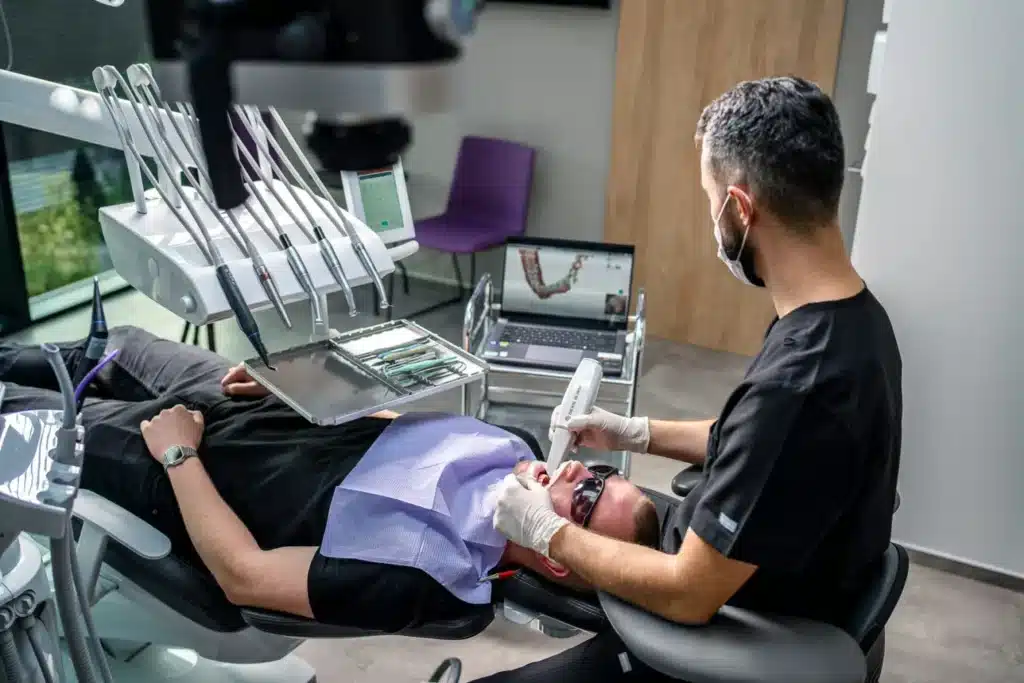
What can prosthetic dentistry do?
Crowns, bridges and restorations for a full set of teeth
Prosthetic dentistry includes all solutions that replace or restore missing or damaged teeth. The most common include:
-
Crowns – a solid covering for a damaged tooth that restores shape, function, and appearance without damaging neighboring teeth.
-
Bridges – replace one or more missing teeth and are attached to the surrounding teeth.
-
Removable dentures – partial or complete dentures that replace missing teeth when implants or bridges cannot be used.
- Veneers – thin ceramic or composite slices that cover the front surfaces of teeth and address aesthetic defects such as discoloration, unevenness, or minor tooth damage.
Prosthetics are often combined with implants to provide a strong and aesthetic result. The goal is to restore full function of the teeth and the appearance of the smile.
Prosthetic dentistry will help if:
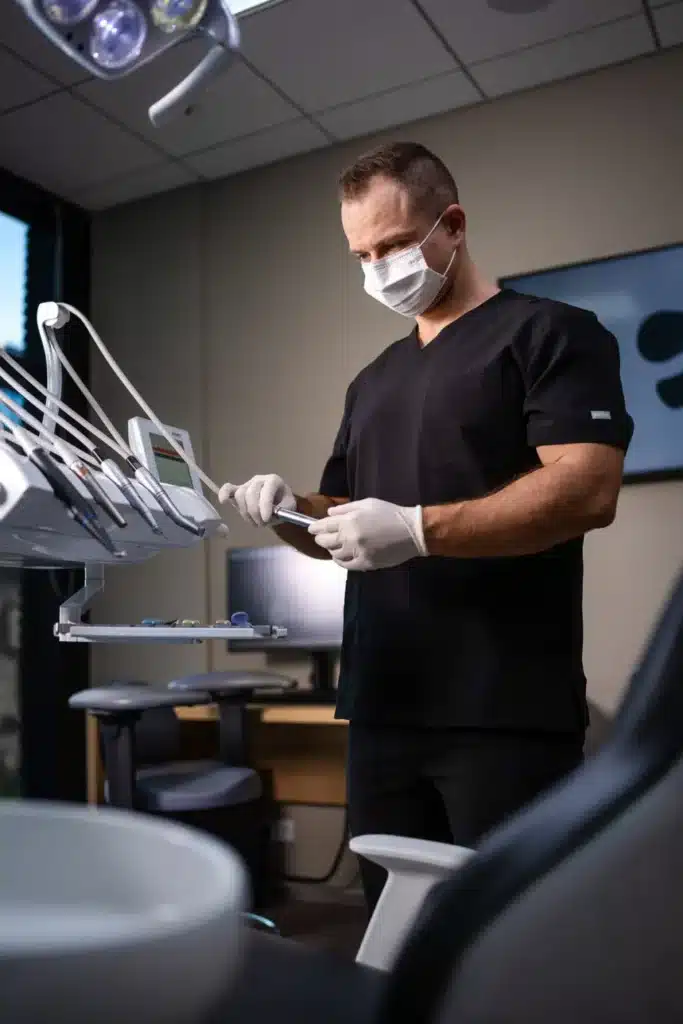
How prosthetic treatment is carried out
From preparation to new teeth, step by step
The prosthetic treatment process depends on the type of prosthesis, but usually includes these stages:
- Consultation and planning
The doctor will evaluate the condition of the teeth and gums, take X-rays and suggest the optimal solution – a crown, bridge or a larger denture. - Tooth or jawbone preparation
Teeth are ground down for a crown or bridge, or the jaw is prepared for the attachment of a prosthesis or implant. - Impression taking and restoration production.
Accurate impressions and a laboratory model will be made, based on which a crown, bridge or restoration will be manufactured, precisely tailored to your teeth. - Trial and fitting
The finished prosthesis is fitted and the doctor adjusts the details so that it fits perfectly and is aesthetically perfect. - Inspection and maintenance
Regular inspections will ensure the longevity of the restoration, and any adjustments will prevent problems with biting or pressure on the gums.
Price of prosthetic treatment
Investing in comfortable and aesthetic teeth
Vraťte si zdravý úsměv a jistotu v každém dni
Objednejte se na implantologickou konzultaci a zjistěte, jaký postup je vhodný právě pro vás
Check out our prosthetic transformations


Frequently asked questions
No. The procedure is performed under local anesthesia, so you will not feel any pain during the procedure. After the procedure, you may experience some mild swelling or tenderness, which usually subsides within a few days.
With proper care and regular check-ups, an implant can last for decades – often a lifetime.
From implant placement to crown placement, it usually takes 2-3 months, depending on individual healing.
Maintenance is the same as for your own teeth – regular cleaning, dental hygiene and check-ups at the dentist. This is what will ensure that the implant lasts as long as possible.
With early diagnosis and proper treatment, the inflammation can be stopped and the condition of the gums and bone can be stabilized. Advanced damage cannot always be completely reversed, but its progression can be significantly slowed down and your own teeth can be preserved.
The treatment is usually performed under local anesthesia and is gentle. Some patients may experience mild discomfort during deeper root cleaning, but the pain is well controlled.
Warning signs include bleeding when brushing, red or swollen gums, bad breath, loose teeth, or gaps between teeth. Even minor symptoms should be addressed promptly.
With proper care and regular check-ups, a crown or bridge can last 10–20 years or longer.
The tooth preparation and crown placement itself are performed under local anesthesia, so they are painless.
Just like with your own teeth: regular cleaning, interdental brushes, and visits to a dental hygienist or doctor for checkups.