
If the decay is already very deep, i.e. it has penetrated to the pulp (nerve), endodontic treatment, also known as root canal cleaning , is necessary .
Restorative dentistry Brno
Prevention and care of your own teeth
Conservative dentistry focuses on early diagnosis, treatment and protection of your natural teeth to keep them healthy, functional and aesthetic. This approach helps prevent complications, pain and the need for extensive procedures , and is suitable for anyone who wants to keep their own teeth for as long as possible.
What is restorative dentistry?
Protecting and maintaining your own teeth
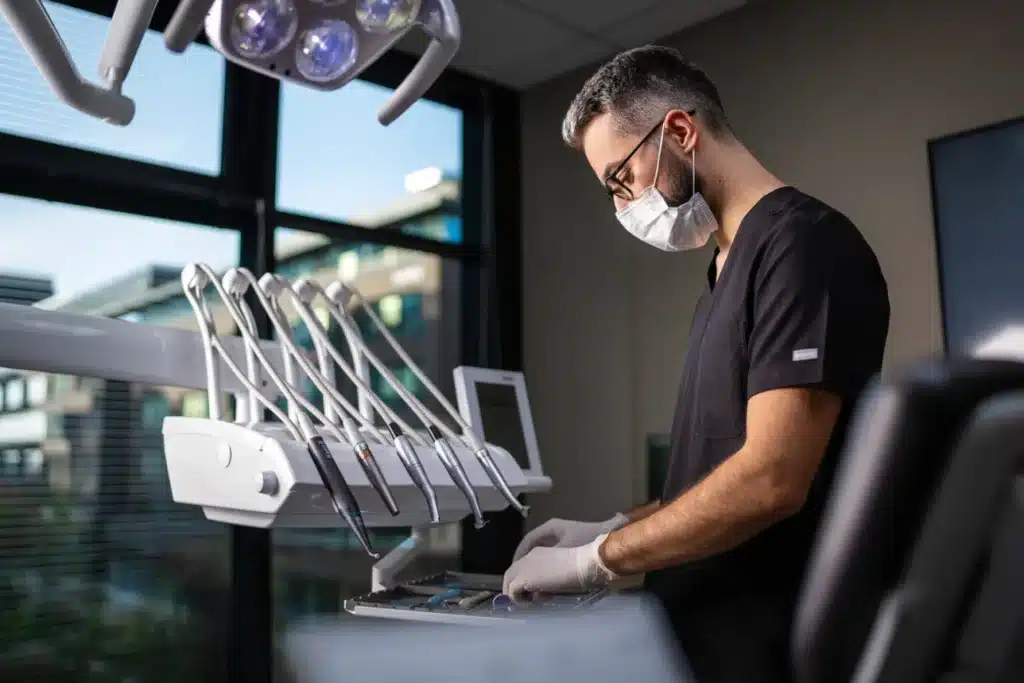
Restorative dentistry focuses on caring for and preserving your teeth . It addresses damage caused by decay or minor enamel defects, tooth sensitivity, and gum problems that could compromise their long-term function. Typically, it involves treating tooth decay with fillings or endodontic root canal treatment . Care also includes prevention and early diagnosis, including regular check-ups and advice on home hygiene to keep teeth healthy and resistant to further complications.
Part of modern restorative care is treatment under a microscope , which allows for a detailed view of tooth structures, precise removal of damaged parts, and an increased chance of long-term tooth preservation.
Restorative dentistry is suitable for patients who:
want to keep their own teeth for as long as possible
have tooth decay, sensitive teeth, or minor enamel damage
want to avoid more complex procedures such as crowns, bridges or implants
are looking for comprehensive care combining prevention and treatment
How is a dental filling made?
Tooth decay treatment step by step
- Diagnosis and preparation of the tooth
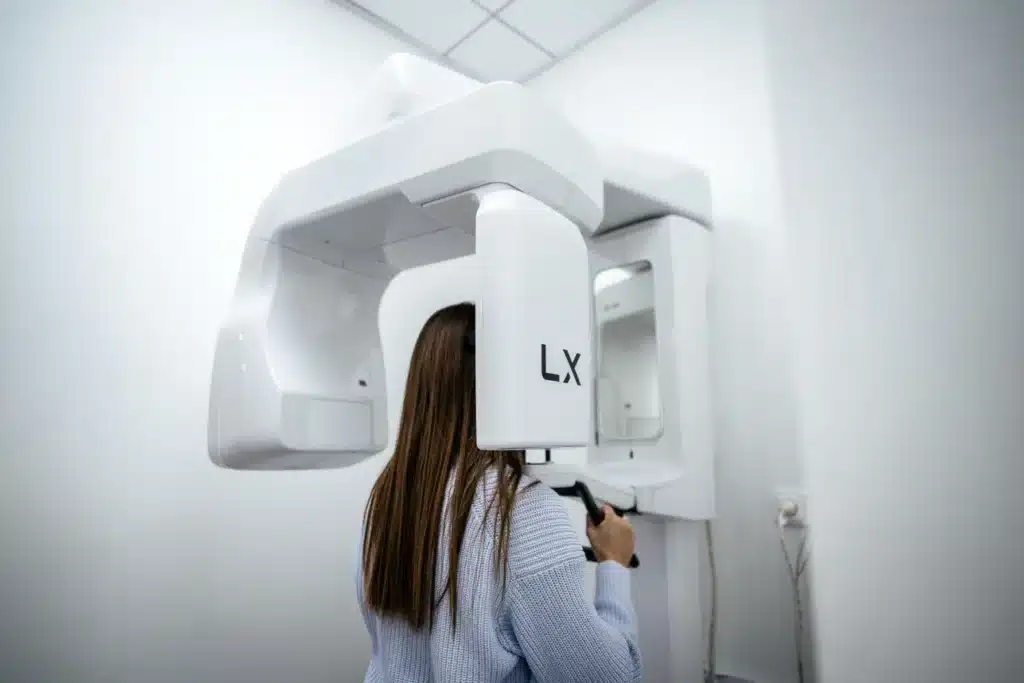
The doctor will assess the damage to the tooth, often taking an X-ray to determine the extent of the decay. The tooth will then be cleaned and prepared for treatment. - Removal of damaged tissue
Using precise instruments, tooth tissue damaged by decay is removed without endangering the healthy part of the tooth. - Applying composite in layers
Composite material is gradually layered into the prepared cavity, which adheres well to the tooth and allows for precise shaping of each layer. - Curing and final shaping of the filling
Each layer of composite is cured with light and the entire filling is finally shaped so that it is smooth and indistinguishable from a natural tooth. - Check and Finish
The dentist will check the bite and make minor adjustments to make the tooth fully functional and aesthetic.
Price list for restorative dentistry
Investing in healthy teeth
The price depends on the type of treatment and the extent of the procedure.
Photocomposite (white) filling
from 2,300 CZK Kč
Endodontic treatment of a tooth
from 6,000 CZK Kč
Re-endodontic treatment of a tooth
from 7,000 CZK Kč
Vraťte si zdravý úsměv a jistotu v každém dni
Objednejte se na implantologickou konzultaci a zjistěte, jaký postup je vhodný právě pro vás

See our transformations in restorative dentistry


Frequently asked questions
No. The procedure is performed under local anesthesia, so you will not feel any pain during the procedure. After the procedure, you may experience some mild swelling or tenderness, which usually subsides within a few days.
With proper care and regular check-ups, an implant can last for decades – often a lifetime.
From implant placement to crown placement, it usually takes 2-3 months, depending on individual healing.
Maintenance is the same as for your own teeth – regular cleaning, dental hygiene and check-ups at the dentist. This is what will ensure that the implant lasts as long as possible.
With early diagnosis and proper treatment, the inflammation can be stopped and the condition of the gums and bone can be stabilized. Advanced damage cannot always be completely reversed, but its progression can be significantly slowed down and your own teeth can be preserved.
The treatment is usually performed under local anesthesia and is gentle. Some patients may experience mild discomfort during deeper root cleaning, but the pain is well controlled.
Warning signs include bleeding when brushing, red or swollen gums, bad breath, loose teeth, or gaps between teeth. Even minor symptoms should be addressed promptly.
With proper care and regular check-ups, a crown or bridge can last 10–20 years or longer.
The tooth preparation and crown placement itself are performed under local anesthesia, so they are painless.
Just like with your own teeth: regular cleaning, interdental brushes, and visits to a dental hygienist or doctor for checkups.